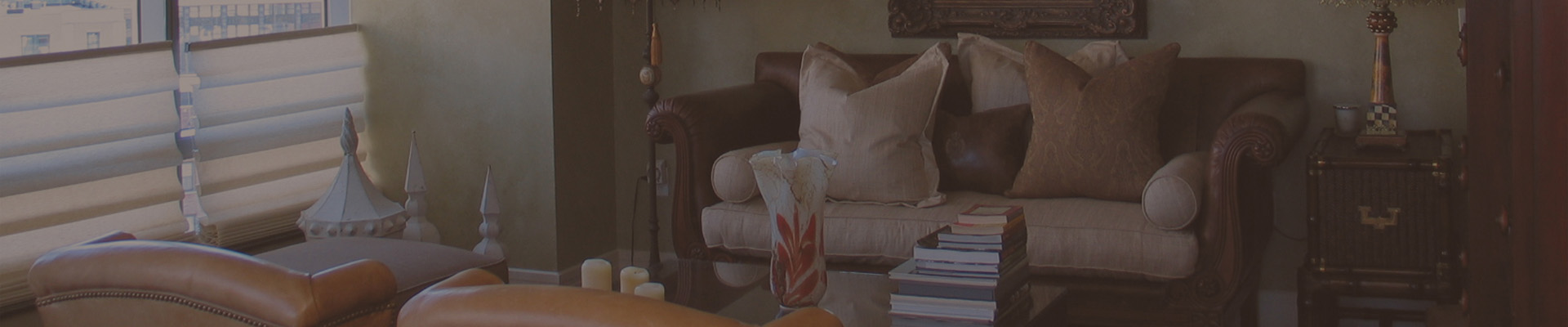
Goodbye bland walls. Colors are back as homeowners, tired of mundane rooms, look for creative ways to add texture, contrast and depth to their walls.
When most homeowners move into a new house, they find walls painted in a generic colour designed to appeal to a wide range of people. The primary criterion is for the walls and ceilings to be innocuous — simple, basic shades of beige or tan. These bland colours are purposely chosen to be a “quiet” partner in the home’s design. Their primary function is to serve as a backdrop for other design elements in the home.
But these days, people look to colour as a way to make a statement, to create a unique, personal look.
“People are telling us they are tired of plain white walls,” says Stuart Stark, design director of Charles Rupert Designs, a Victoria company that specializes in modern and traditional wallpaper and accessories.
“They are turning to wallpaper designs that create feature walls in modern apartments and background patterns that bring together all the colours in a room.”
Although the use of wallpaper has been shunned by decorators in the last decade, Stark’s company has been able to weather the downturn by specializing in unique and classic Victorian and Arts and Crafts designs. The company currently has 27 showrooms in the U.S, six in Australia and three in Canada. It regularly ships wallpaper worldwide.
The company has seen a resurgence of interest as modern patterns, such as large-scale florals, become available. Stark says, “People are starting to use colourful designs as a fashion statement.”
Other designers agree.
“I definitely see a strong trend towards decorated walls,” says J.C. Scott, owner of JC Scott Interior Design. “In a way, the use of unique, often British, wallpaper designs have never stopped.”
He says wallpaper’s enduring popularity can be partially attributed to its ability to hide such imperfections as small cracks on walls. “Perhaps that’s why we see a lot of wallpaper from Britain,” Scott quips.
But for most people, it is the thousands of patterns, borders and backgrounds that attracts them to seek wallpaper to complement their decor.
Margaret and John Paul recently wallpapered the bedroom of their two-level home in Oak Bay. They chose an Arts and Crafts design with grapes to go with the rest of the decor in their cosy home.
“I wanted to wake up to a wonderful surprise every morning,” says Margaret, a retired teacher. “I wanted a design that was timeless and beautiful.”
She says she justified the $150 per roll price for her wallpaper by reasoning the ageless design would mean that she would not have to redecorate every year.
Not every pattern is timeless. Banish the image of tacky floral patterns and primary-coloured stripes popular in the 1970s and ’80s. Times have changed and so have wallpaper patterns. Today’s embossed wallpapers are lighter and easier to apply but still provide all the benefits. Some papers add texture, such as linen-like slubs, for dimension and architectural interest to rooms. Patterns can emulate bead board, weaves and even stucco.
Anaglypta, an embossed wallpaper made from cotton pulp, is increasingly popular because it can be painted. Homeowners can use layers of colours to create contrast and depth.
But wallpapering a room is more expensive than simply painting. Wallpaper can be costly and unless a homeowner is confident of his skills, a professional hanger might be needed. Sometimes a pattern is not available in colours complementary to a homeowner’s furnishings or style.
While certain architectural styles are conducive to wallpaper application, homeowners looking to add atmosphere to a modern room still turn to paint, say paint retailers.
“While I see wallpapers making a comeback, it’s not popular among conservative homeowners,” says Andrew Dylong, a paint consultant with Pacific Paint. “And there are a lot of them.”
The low interest in wallpapers has led the company to stop carrying wallpapers altogether and drop it from their company name. Many homeowners are using paint rather than paper to create a feature walls with a generous splash of colour. Homeowners find freshening one wall is one of the cheapest and fastest ways to give a home a new look to keep up with the latest colours. Dylong says exposure to new international decor ideas have lead to a greater willingness by the adventurous to try out new combinations.
“The trick is to be able to pick a colour to enhance a room without it overtaking the decor,” says Dylong.
That is one of the reasons many employ the services of a professional painter.
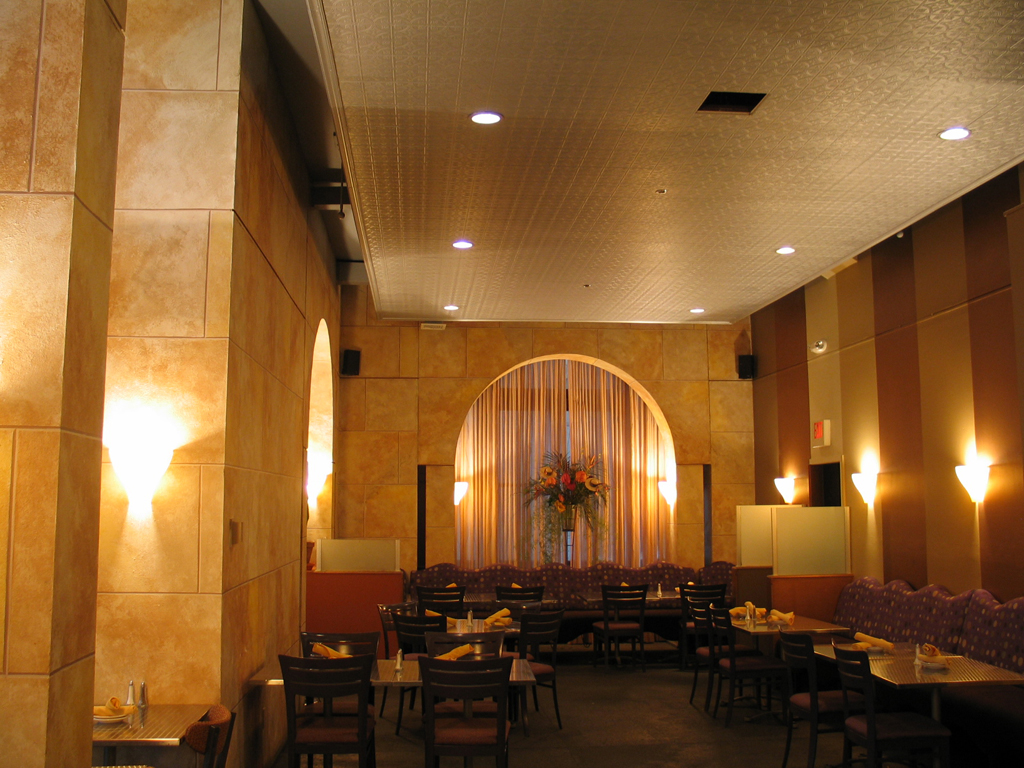
Some, like Leah Langefeld, owner of Langefeld Painting & Wall Design, raise paint to an art form, creating customized wall and ceiling treatments. Often it is just a focal wall but increasingly bolder and more adventurous designs are re-emerging in “statement rooms” such as powder rooms.
“It’s not just about being decorative, it is about using painting techniques to add atmosphere to a room,” says Langefeld, who has worked around the country. She says a good painter can use paint to complement or replace wallpaper.
Often, she can customize the colours of a design so that it complements existing furniture or art. The cost is less than wallpapering because the cost for a few cans of paint is considerably less than the equivalent number of rolls of wallpaper required to cover a wall.
“Best of all, if you get tired of the look, you can simply paint over it,” says Langefeld.
This article was published in The Times Colonist (Victoria) on Wed Aug 27 2008 by Pedro Arrais.